

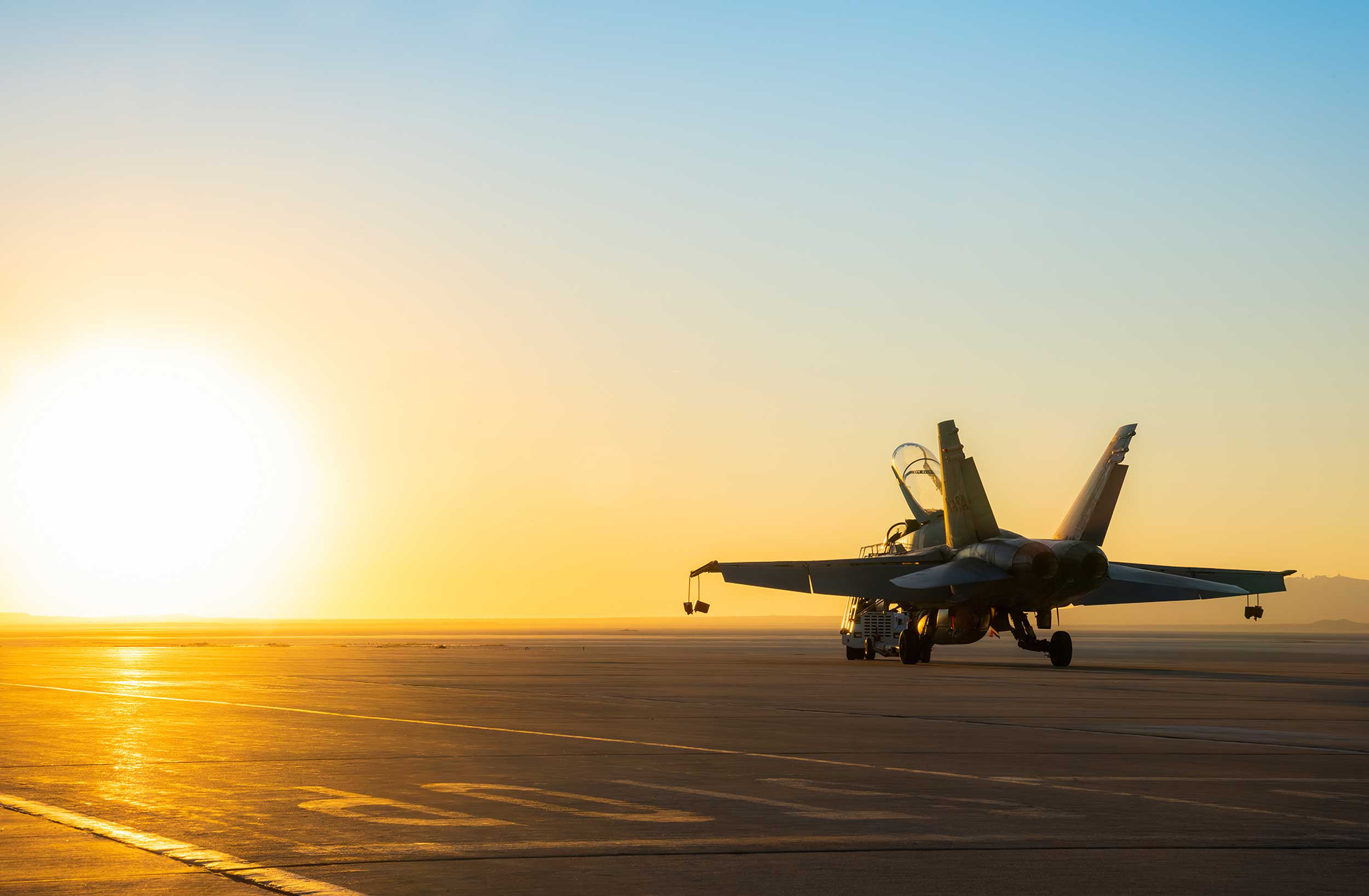
Military Runway Repair Is a Readiness Issue — Not a Maintenance Task
When a runway fails, operations fail.
For armed forces installations, runway integrity directly impacts sortie rates, deployment timelines, emergency lift capability, and training operations. Damaged pavement isn’t cosmetic — it’s operational risk.
Surface failures such as:
-
Concrete spalling
-
Joint deterioration
-
Cracking and delamination
-
Freeze/thaw damage
-
Load-induced surface fatigue can cause aircraft to ground and reduce mission capability.
According to the Federal Aviation Administration (FAA), pavement surface conditions directly influence aircraft safety and Foreign Object Debris (FOD) risk (FAA Advisory Circular 150/5380-6C).
For military installations, the stakes are even higher. The U.S. Air Force Civil Engineer Center (AFCEC) emphasizes rapid airfield damage repair (RADR) capability as essential for operational resilience in contingency environments.
In other words, runway downtime reduces combat readiness.
The Hidden Cost of Slow Runway Repairs
Traditional concrete runway repair methods often require:
-
12–48 hour cure times
-
Large repair zones
-
Heavy equipment mobilization
-
Full or partial runway closures
For commercial airports, this leads to lost revenue and schedule disruptions.
For military bases, it can mean:
-
Reduced sortie generation
-
Aircraft rerouting
-
Delayed training cycles
-
Increased vulnerability during high-tempo operations
Military airfield maintenance teams cannot afford multi-day closures for localized spall repair.
Rapid runway repair systems solve this operational bottleneck.
Why Rapid-Set Concrete Runway Repair Matters
Modern airfield concrete repair materials are engineered to:
-
Achieve high early compressive strength
-
Restore structural capacity within hours
-
Bond permanently to existing slabs
-
Perform under extreme temperature shifts
-
Support heavy aircraft loads immediately
Rapid-setting runway repair systems allow airfields to:
✔ Complete repairs within a single operational window
✔ Reopen runways in as little as 1–2 hours
✔ Avoid extended mission disruption
✔ Reduce lifecycle repair frequency
This approach aligns directly with military Rapid Airfield Damage Repair (RADR) doctrine, which prioritizes restoring operational capability as quickly as possible following damage or deterioration.
Extreme Environments Demand High-Performance Materials
Military runways face environmental stressors that most civilian pavements never encounter:
-
Desert heat expansion
-
Arctic freeze/thaw cycles
-
Jet blast shear forces
-
High-load braking impact
-
Chemical exposure from fuels and hydraulic fluids
Research from the U.S. Army Corps of Engineers highlights the importance of rapid-setting, high-strength repair materials for airfield pavement restoration in expeditionary and combat environments.
Repair materials must not only cure quickly — they must maintain durability under cyclic aircraft loading.
Temporary patching creates future failure points. Structural restoration maintains readiness.
Rapid Runway Repair Is Infrastructure Resilience
Air superiority depends on infrastructure reliability.
When airfields implement advanced rapid runway repair systems, they gain:
- Greater operational flexibility
- Faster emergency response capability
- Lower total maintenance costs
- Reduced runway closure frequency
- Improved FOD prevention
Military runway repair is no longer just about fixing concrete. It is about sustaining strategic capability.


