
Airfield Maintenance
Polymer vs. Rapid-Set Concrete for Runway Repair: How to Choose
July 14, 2026
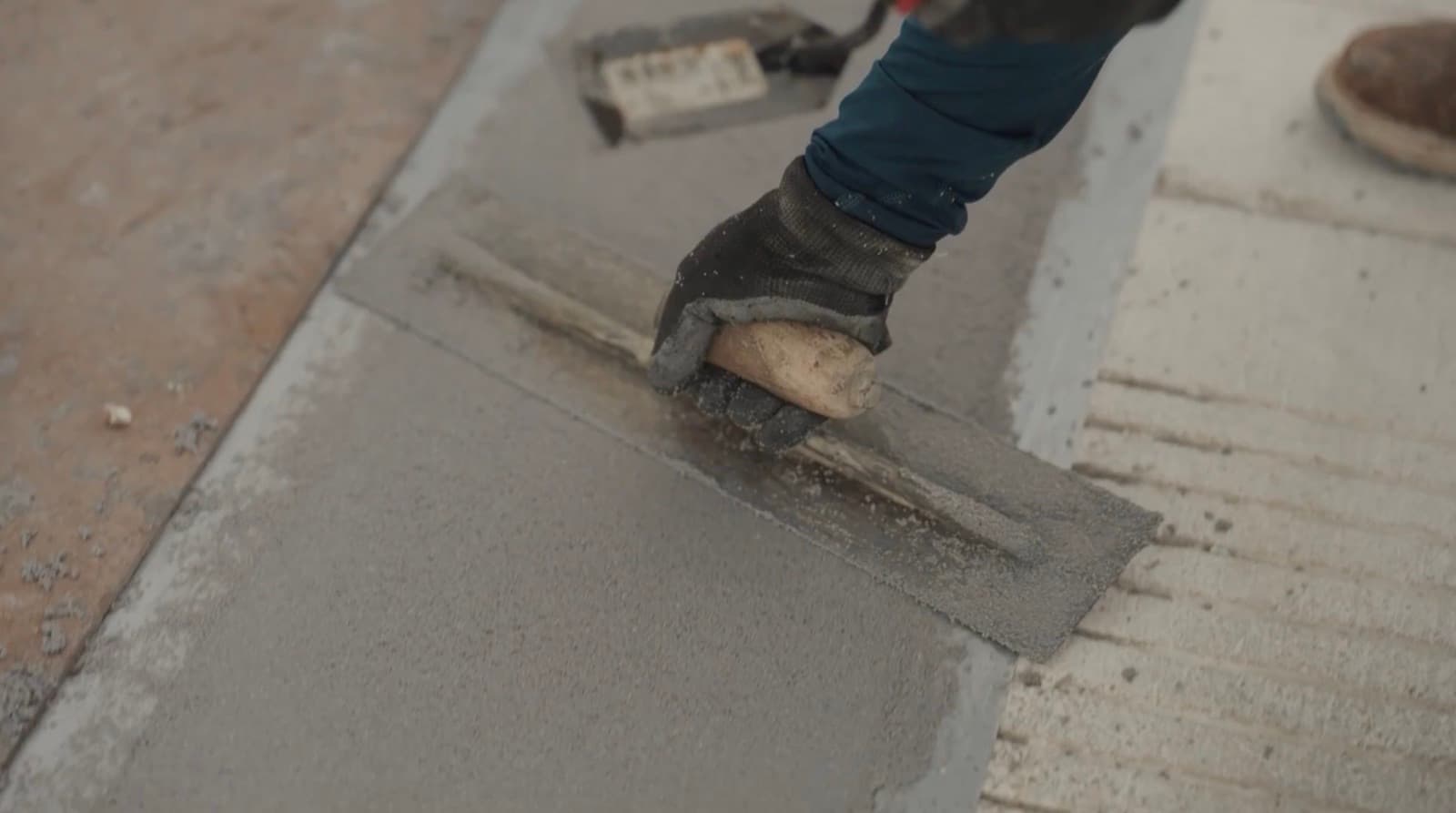
Choosing a runway repair material is a trade-off. Cure speed, strength, repair depth, and climate all pull against each other. The right choice depends on the mission — not the marketing.
This guide breaks down the main material categories used for airfield concrete repair. It is written to help an engineer or project manager compare options on the factors that matter. No brand names. No hype. Just how the categories behave.
The main runway repair material categories
Airfield repair materials fall into four broad families. Each solves a different problem.
Rapid-set hydraulic cements
These are cement-based systems, often built on calcium sulfoaluminate (CSA) chemistry. They gain strength fast — hours, not days — and are compatible with existing portland cement concrete.
Rapid-set cements deliver strong compressive performance and behave like the concrete around them. That makes them a familiar option for full-depth patches and larger volume repairs. The trade-off is that cure speed still depends on ambient temperature, and cold placement can slow strength gain.
Polymer concrete
Polymer concrete replaces cement binder with a polymer resin — typically epoxy or methacrylate — mixed with aggregate. It cures quickly, bonds well to prepared concrete, and resists water and chemical intrusion because of its low permeability.
Polymer concrete is a durable choice for spall repair and areas exposed to fuel or de-icing chemicals. Placement demands attention to surface prep, mix ratio, and temperature, since resin chemistry is sensitive to conditions.
Polyurea and polyurethane systems
These elastomeric systems cure very fast — some formulations reach drive-over in roughly 10 to 15 minutes. They stay flexible, which helps them absorb movement and impact in thin or shallow repairs.
The flexibility is also the limit. Polyurea and polyurethane systems are best for shallow spalls, joint repair, and surface work, not deep structural patches carrying full aircraft loads. Application usually requires specialized spray equipment and trained crews.
Thermoset vinyl polymer
This is SpallKRETE's category. A thermoset vinyl polymer develops high early strength and forms a structural bond to the existing slab. It thermosets without external heat, and it tolerates a wide temperature range at placement.
The combination targets the hardest requirement in airfield repair: get back to full aircraft loads fast, in real field conditions, without a curing rig. More on the specifics below.
The decision factors
Before comparing products, define the repair. These factors drive the choice.
- Return-to-service time. How fast must the surface carry traffic or aircraft? This is often the first constraint.
- Repair depth. Shallow spall, full-depth patch, or joint work. Depth narrows the material list quickly.
- Load and impact demands. Runways see high point loads and repeated impact. Structural repairs need structural materials.
- Temperature and climate at placement. Resin and cement chemistries behave differently in heat and cold. Field temperature is not a footnote.
- Bond to existing concrete. A repair is only as good as its bond. Debonding fails fast under load.
- Durability and chemical resistance. Fuel, hydraulic fluid, de-icing salts, and standing water all attack repairs over time.
- Crew and equipment needs. Some systems need spray rigs and trained applicators. Others mix and pour with a standard crew.
For a deeper look at why bond, early strength, and impact resistance matter mechanically, see the science behind high-performance concrete runway repair.
Category comparison
Claims below are general and directional. Specific numbers are cited only for SpallKRETE, from its published data sheet.
| Category | Typical return to service | Strength profile | Best use | Climate tolerance |
|---|---|---|---|---|
| Rapid-set hydraulic cement (CSA) | Hours | High compressive; cement-like | Full-depth patches, larger volumes | Moderate; cold slows cure |
| Polymer concrete (epoxy/MMA) | Fast (varies) | Strong bond, low permeability | Spall repair, chemical exposure | Moderate; resin-sensitive |
| Polyurea / polyurethane | Very fast (minutes) | Flexible, lower structural | Shallow spalls, joints, thin sections | Varies by formulation |
| Thermoset vinyl polymer (SpallKRETE) | 1–2 hours to full service | High early + structural bond | Spall and structural repair in extreme conditions | −40°F to 120°F placement |
Where SpallKRETE fits
SpallKRETE is a three-component thermoset vinyl polymer built for the field, not the lab. The published data supports its positioning.
- Compressive strength: 11,412 PSI (ASTM D695)
- Tensile strength: 1,054 lb/in² (ASTM D638)
- Bond to concrete: 16,268 lb peak (ASTM C882)
- Impact: 83 ft-lbf at −20°F
- Water absorption: 0.64%
- VOC: <0.01
- Continuous temperature limit: 175°F
Operationally, it returns to service in 1 to 2 hours. It mixes in under 5 minutes. It thermosets with no external heat. Placement range runs from −40°F to 120°F, with a cold-weather additive for the low end. Chemical resistance is excellent against saltwater and water, and good against acids and petroleum.
The practical edge is the crew. SpallKRETE ships in 2.7 CF kits and is mix-and-pour — no specialized applicators, no spray rig. That matters when a repair has to happen on a forward airfield with the crew on hand.
SpallKRETE meets or exceeds MIL-STD and FAA requirements for runway repair materials. For how those standards map to material properties, see our guide to MIL-STD runway repair materials.
The short version: where a repair needs high early strength, a real structural bond, and performance across desert-to-arctic conditions without a heat source, a thermoset vinyl polymer covers ground that faster-but-flexible or slower-but-cement-based options do not.
Frequently Asked Questions
What is the best material for runway spall repair?
There is no single best material — it depends on depth, load, return-to-service time, and climate. For spalls that must carry aircraft loads quickly in harsh conditions, a thermoset vinyl polymer like SpallKRETE offers high early strength and a structural bond back to service in 1 to 2 hours. For shallow, flexible surface work, polyurea systems can be faster. For large full-depth volumes, rapid-set cements are a common choice.
Is polymer concrete good for runways?
Yes, for the right repair. Polymer concrete cures fast, bonds well, and resists water and chemical intrusion, which suits spall repair and chemically exposed areas. Its performance depends on surface prep and placement temperature. Thermoset vinyl polymer is a distinct category that adds high early strength and a wide placement temperature range without external heat.
How fast can a runway repair cure?
It varies by material. Some polyurea systems reach drive-over in roughly 10 to 15 minutes but are limited to shallow, flexible repairs. Rapid-set cements gain strength over hours. SpallKRETE returns to full service in 1 to 2 hours while delivering structural strength — a balance of speed and load capacity.
Do I need a specialized crew to place these materials?
It depends on the system. Polyurea and polyurethane typically require spray equipment and trained applicators. SpallKRETE is mix-and-pour in 2.7 CF kits and needs no specialized crew or curing equipment.
Choosing for your airfield
Match the material to the mission. Define your return-to-service window, repair depth, load, and placement temperature first. Then compare categories against those constraints.
If your requirement is fast, structural, field-hardened repair that meets or exceeds MIL-STD and FAA requirements, SpallKRETE is built for it.
Ready to spec it for your next repair? Submit an RFP or contact adominguez@spallkrete.com for data sheets and quote support.
Next Step
Need SpallKRETE for your airfield?
Request a proposal or download the technical spec sheet.